Mounting adhesive
No. Copies: 2; Adhesive: Tube of mounting adhesive
This page offers mounting glue in a tube for signs and plaques. Select the required number of tubes and assess the application surface before deciding how to install them.Plaque material, weight and wall finish affect adhesive choice. Follow the product instructions for preparation and setting times; the glue’s name alone does not establish drying time or load capacity.
Take a look at these too
Glue for mounting plaques on a wall and on other surfaces
This page offers glue for mounting plaques on a wall: an adhesive in a tube for fixing plaques and signage. You select the number of tubes and, before mounting, assess the application surface.
When should you choose glue?
Glue is the right choice when you want a fixing with nothing on view: no screws, no standoffs, just the plaque resting against the wall. Bear in mind that a glued bond is meant to stay: if you expect to move or replace the plaque often, choose a system that can be separated.
Which surfaces can you glue a plaque to?
It depends on the adhesive and on the wall. Plaster, tiles, wood, metal and glass behave differently: a smooth, solid surface offers more contact than one that is rough, crumbly or freshly painted. This page does not give a list of guaranteed materials: read the instructions on the product and, if in doubt, do a test on an inconspicuous area.
How to prepare the wall and the plaque
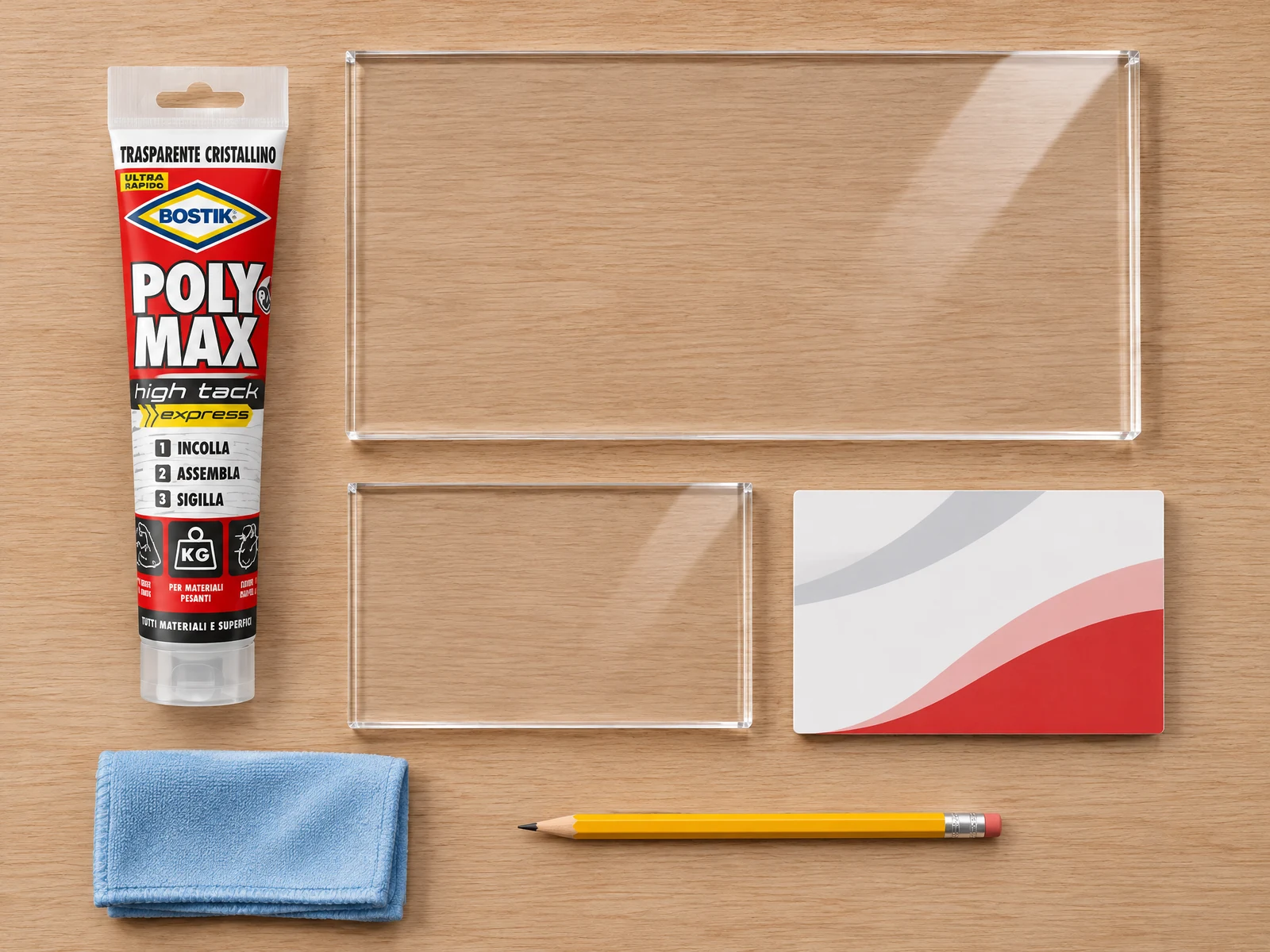
- Clean dust and grease off both surfaces and let them dry.
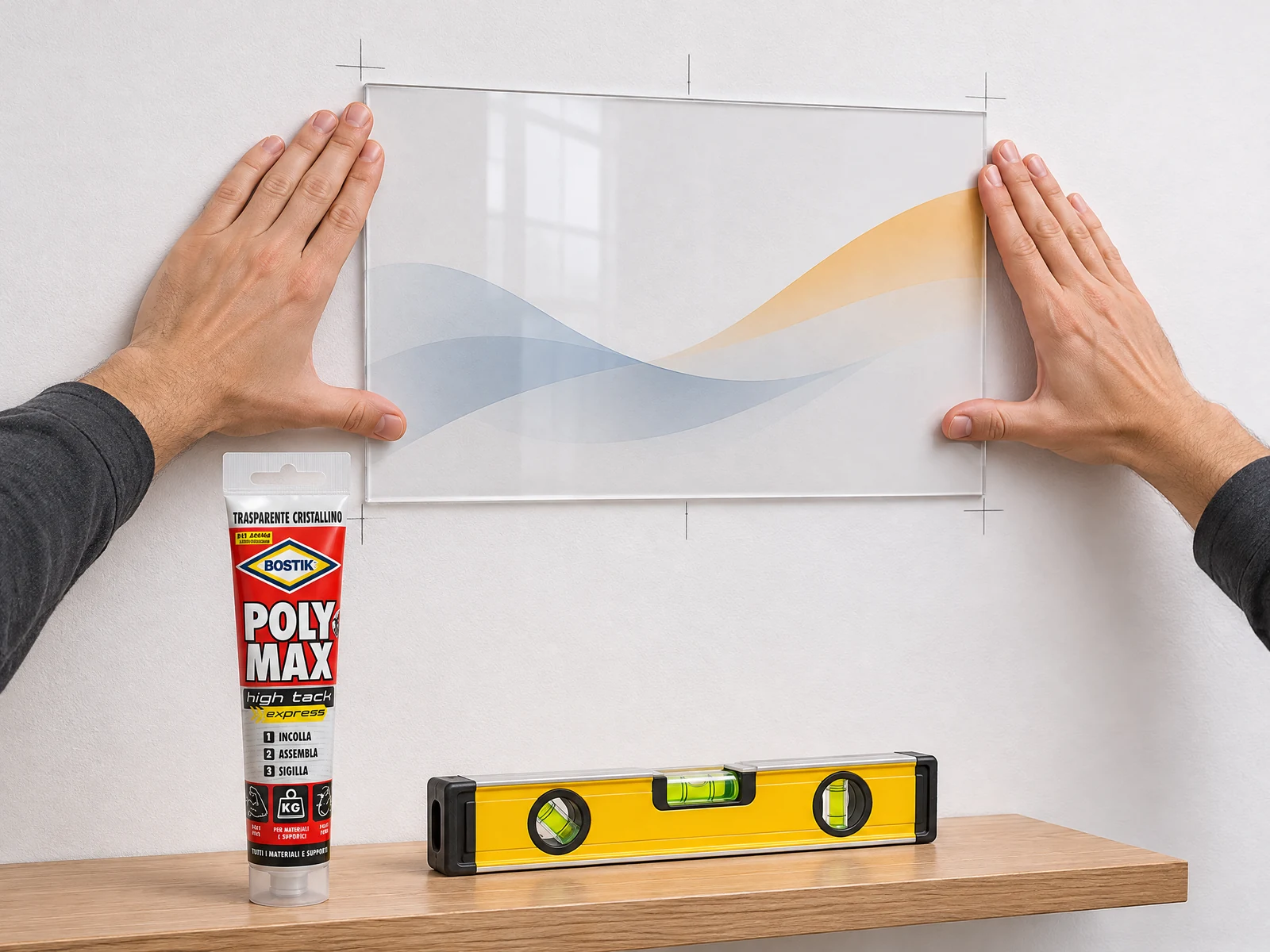
- Mark the position with a level and a pencil before applying the glue.
- Apply the adhesive to the back of the plaque following the product instructions.
- Hold the plaque in position for the time stated on the packaging.
Do not work out setting times or load capacities from the name of the glue alone: what counts is the product instructions.
How many tubes do you need?
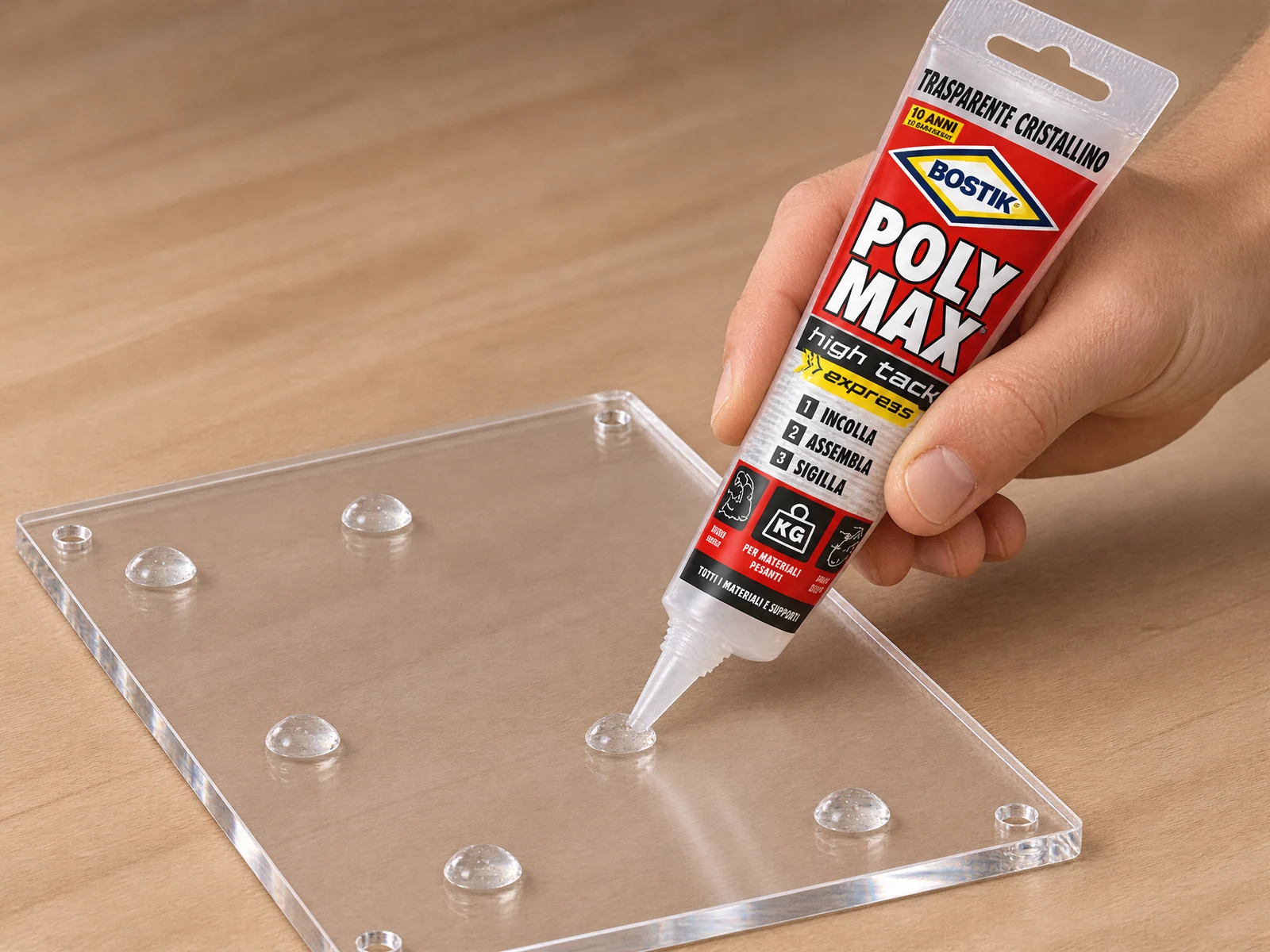
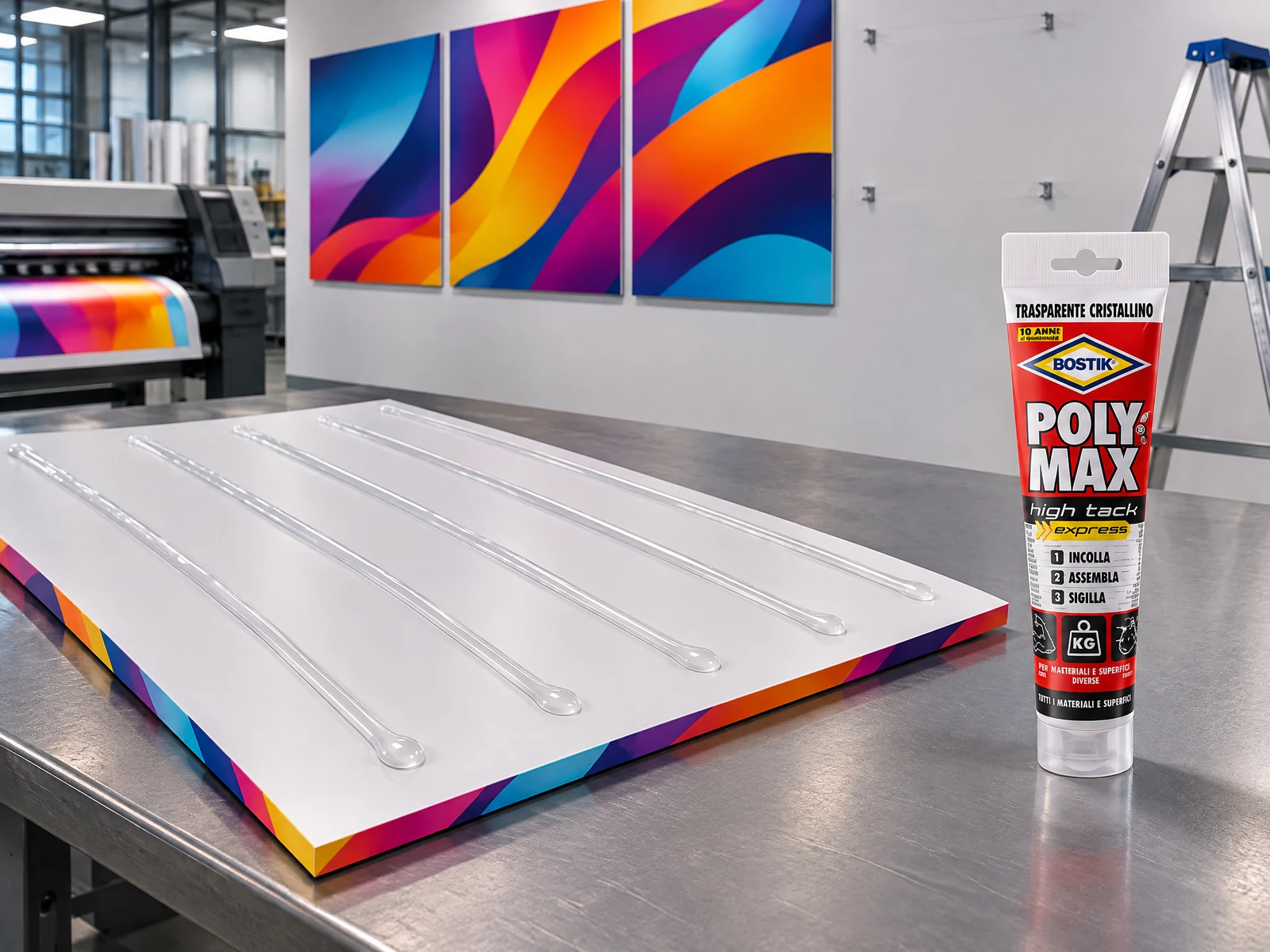
It depends on the number and size of the plaques. This page does not state a coverage per tube: for a job with many plaques, or with large plaques, ask our team to check before you order. A small plaque needs only a few dots of glue, a large panel needs strips across its whole surface: if you have several pieces to mount, order a few extra tubes so the job is not interrupted.
Can the glue be removed?
A glued bond is not a temporary fixing. Taking off a glued plaque can leave residue or affect the finish of the wall. If the plaque will need updating, for example in a practice where the names change, a system that separates is more practical.
Which glue do you receive?
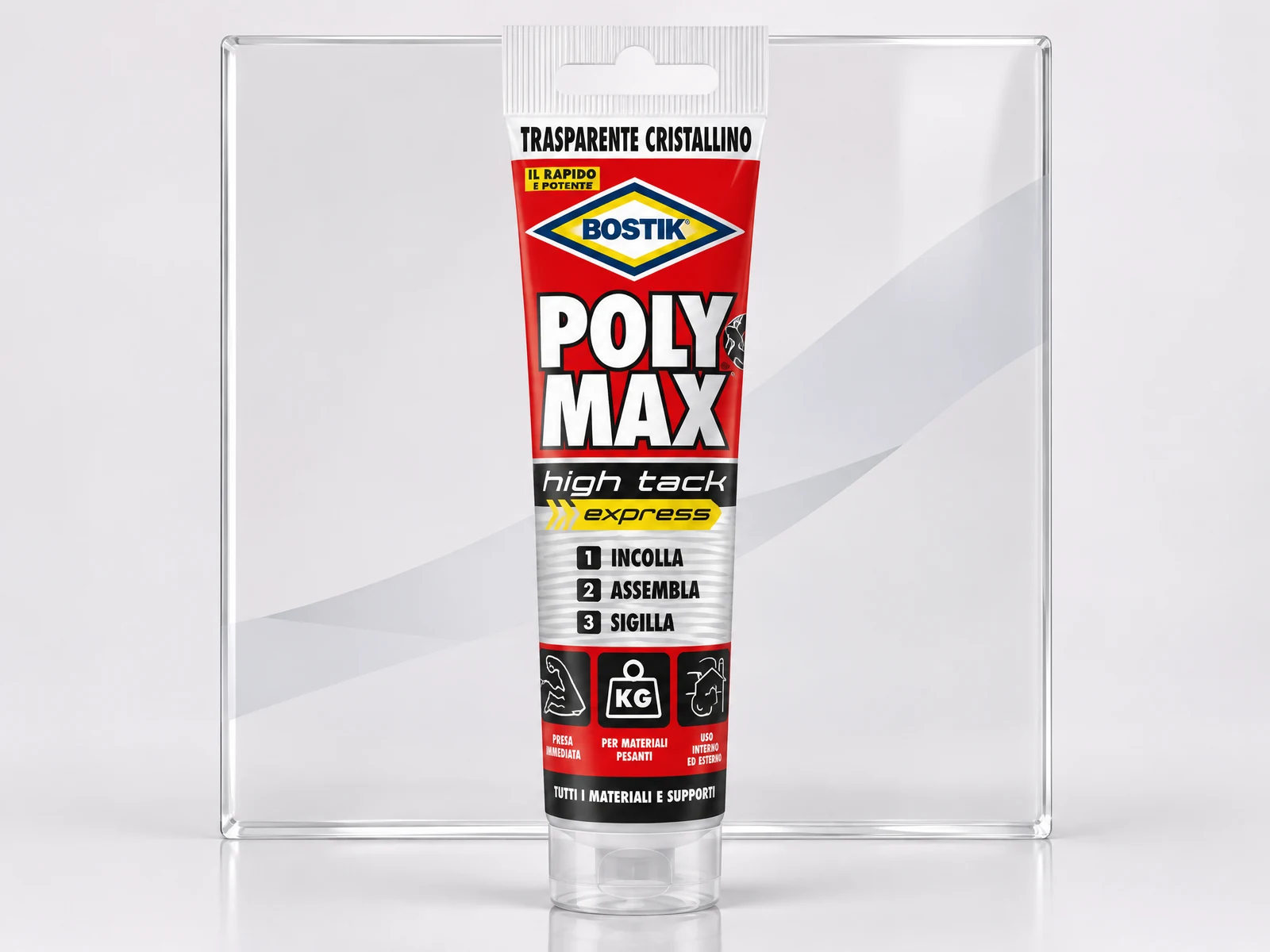
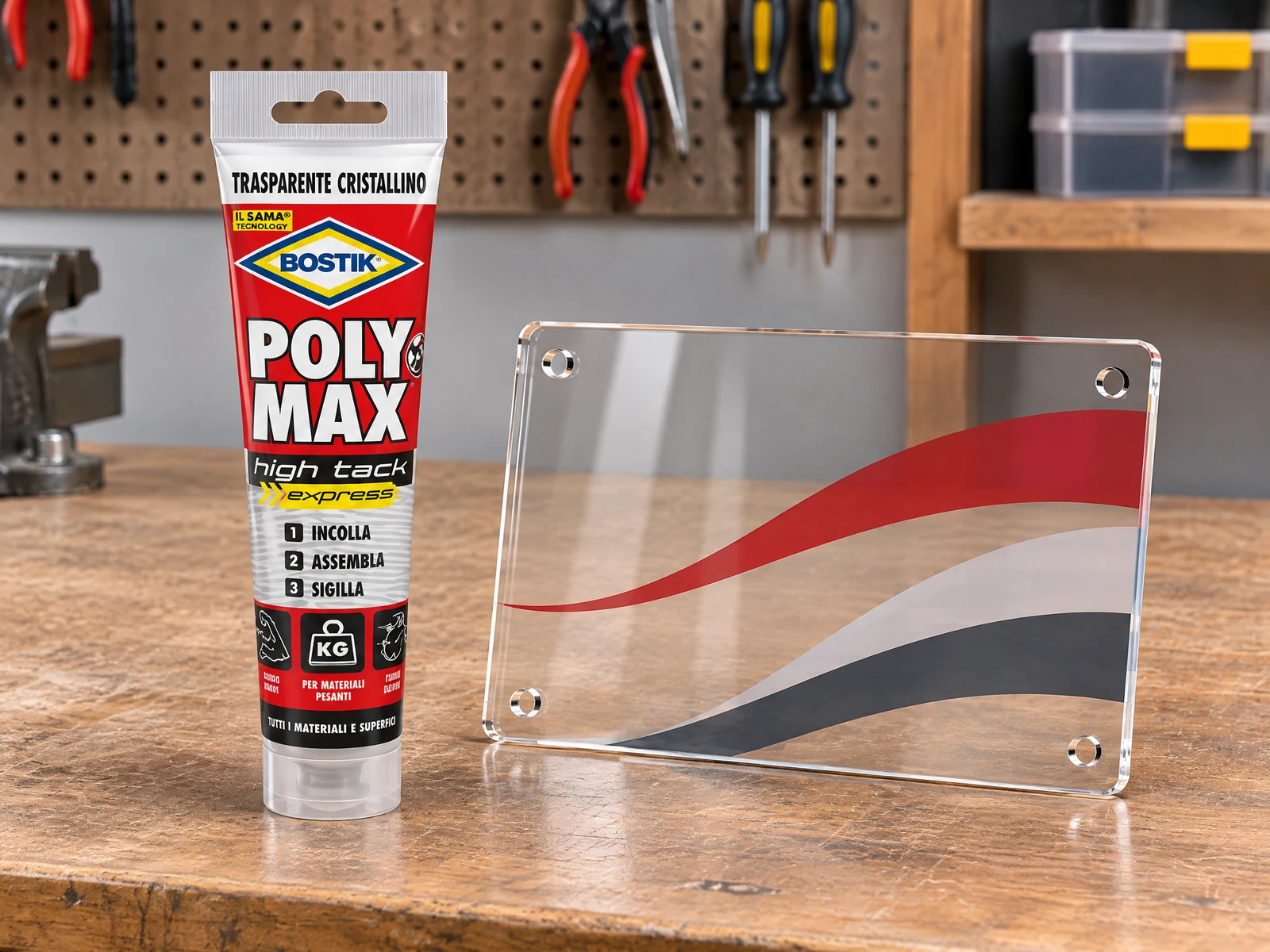
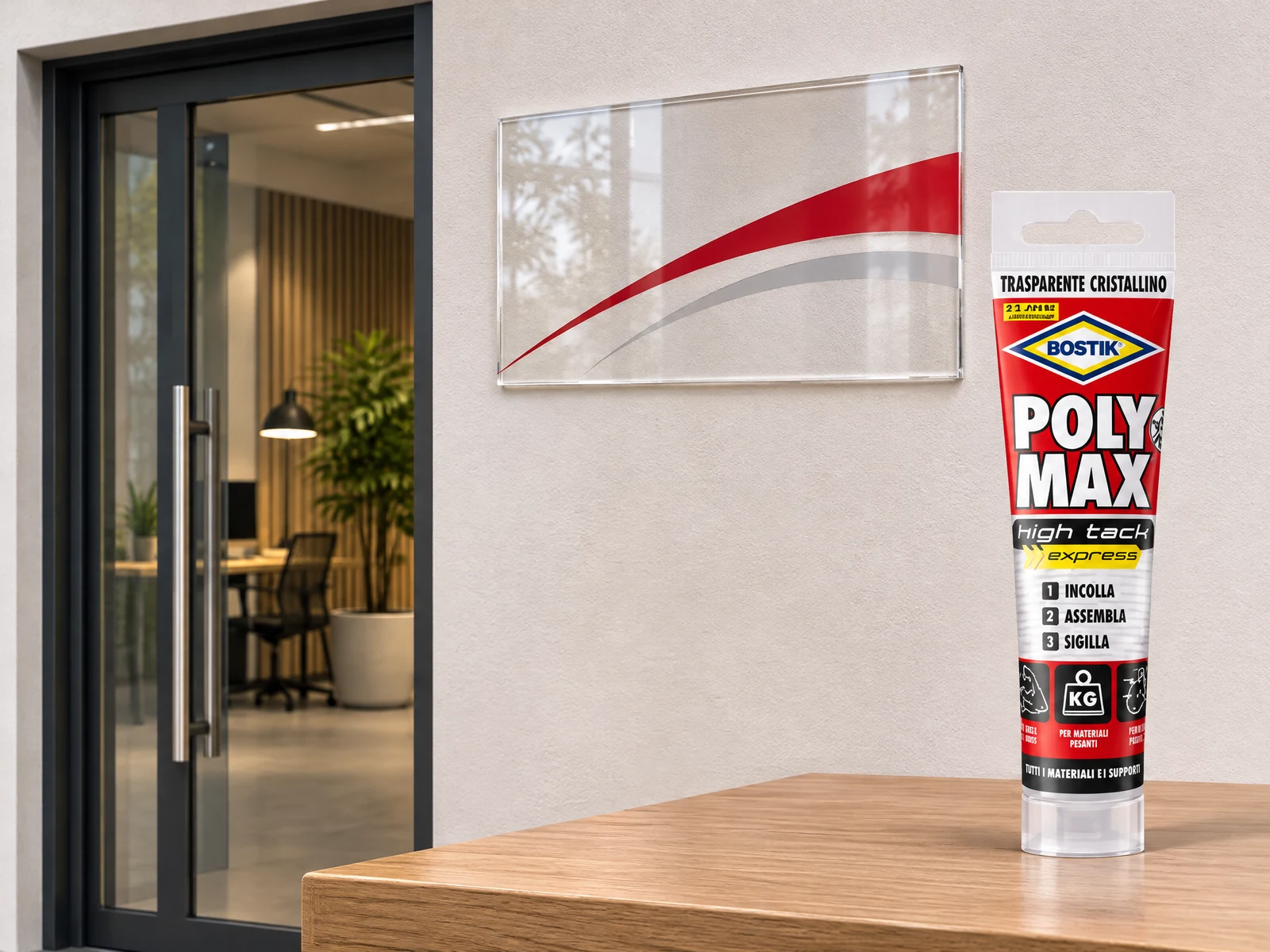
The tube is Bostik Poly Max High Tack Express transparent. It is a clear glue, discreet even where the edge of the plaque stays in view. For technical data, times and warnings, what is printed on the pack applies.
How do you mount a Plexiglas plaque with glue?
- Do a dry run: hold the plaque against the wall and mark the corners in pencil.
- Apply the glue to the back in small dots or thin strips, away from the edges, so it does not squeeze out when you press.
- Place the plaque on the marks, check it with a spirit level and press evenly.
- Support the plaque with masking tape until the glue has set, following the times given on the pack.
On clear Plexiglas the dots of glue may show through: put them behind the printed areas of the design, where they stay covered.
Can printed panels be glued too?
Yes: glue mounting is also used for rigid printed panels, when you want a surface without screws. The preparation is the same: a clean, dry wall, strips of glue on the back, the panel supported until the glue sets. The larger the panel, the more its weight and the flatness of the wall matter: for larger formats consider a mechanical fixing or ask our team to check. In the catalogue you find posters on rigid board, pictures on rigid board, photos on Forex and photos on aluminium.
Is it suitable outdoors as well?
That depends on the instructions on the pack and on the surface. Outdoors, rain, sun and temperature changes matter, as does the type of wall: check the warnings before gluing a plaque outside the entrance and, if in doubt, choose a mechanical fixing such as standoffs.
Which mistakes should you avoid?
- Gluing onto dust, damp or flaking paint: the glue holds only as well as the surface beneath it.
- Putting too much glue near the edges, where it then squeezes out.
- Leaving the plaque unsupported before the glue sets.
- Choosing glue for a plaque that will need changing often.
Glue, double-sided tape, hook-and-loop strips or standoffs?
- Double-sided tape for mounting: tape on a roll, for light, flat plaques.
- Hook-and-loop strips: the plaque comes off and goes back on.
- Standoffs for plaques: mounting with a visible gap from the wall; the plaque needs holes.
- Glue: fixing flush with the wall, with nothing on view.
You will find all the systems among the plaque accessories.
Which plaque do you need to mount?
The mounting system is chosen together with the plaque. In the catalogue you will find Plexiglas plaques, aluminium plaques, outdoor plaques, door plaques, desk plaques and house number plaques, as well as the custom plaques category. On a transparent plaque the adhesive may remain visible through the material: in that case consider standoffs. Always check that the adhesive is compatible with the material of the plaque.
What to check before ordering
- material and weight of the plaque;
- type and condition of the wall;
- indoor or outdoor setting;
- whether the plaque will need to be removed in future;
- number of tubes.
Configurations
- Mounting adhesive, 2 tubes (US)
No. Copies: 2; Adhesive: Tube of mounting adhesive
- Mounting adhesive, 2 tubes (GB)
No. Copies: 2; Adhesive: Tube of mounting adhesive
Starting from 30,00 € for 2 pcs, VAT excluded · Total: 36,60 € (VAT included)